Finland Brings Global 6G Thought Leaders Together to Shape the Future of Connectivity
Leading researchers, technology companies, policymakers and funders from Europe and the United States gathered at the 6G Summit in Helsinki to discuss the future of wireless intelligence and open new pathways for global collaboration.
Visit the 6G Summit website and view the full agenda
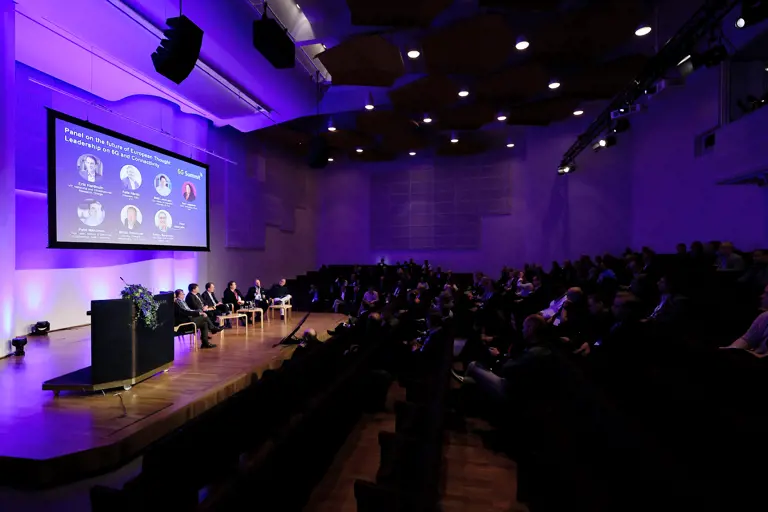
The event was organised by Business Finland’s 6G Bridge program and the University of Oulu’s 6G Flagship project. As these major 6G research programs reach key milestones, the event provided a forum for presenting results, shaping future priorities and strengthening global cooperation. Discussions will focus on AI-powered networks, resilience, sustainability, security and the future role of communications technologies in society and the economy.
Speakers include representatives from organisations such as Nokia, NVIDIA, the European Space Agency (ESA), the U.S. National Science Foundation, the European Commission's Smart Networks and Services Joint Undertaking, and the Finnish government.
6G is no longer merely a research vision
In her speech, Finland’s Minister of Transport and Communications Lulu Ranne emphasised that shaping the future of 6G requires ambition, cooperation and hard work. Alongside technological expertise, shared standards and a willingness to think big are needed to enable progress. She stressed the importance of preparing for the future proactively rather than simply reacting to change.
Erzsébet Fitori from Executive Director, Smart Networks and Services Joint Undertaking, elaborated on the European view on 6G. She stated Finland’s ambitions are closely linked to the wider European 6G agenda. From a European perspective, 6G is far more than the next generation of mobile connectivity: it is a strategic opportunity to build the AI economy, strengthen public services and security, and reinforce Europe’s technological sovereignty.
Jayaweera Kankanamge Sudharman representing the National Science Foundation explored European and U.S collaboration in 6G. The NSF’s $110-million-plus investment supports a broader portfolio of wireless research and technology projects, including collaborations with Finnish and Swedish teams. Sudharman highlighted Finland’s and Sweden’s expertise in mobile communications to provide a strong foundation for partnerships that aim to move research towards real-world use and continue beyond the initial three-year funding period.
An insightful panel discussion added perspectives from telecom operators, research organisations and industry to these broader discussions on the future of 6G.
Industry fireside chat with Nokia and NVIDIA
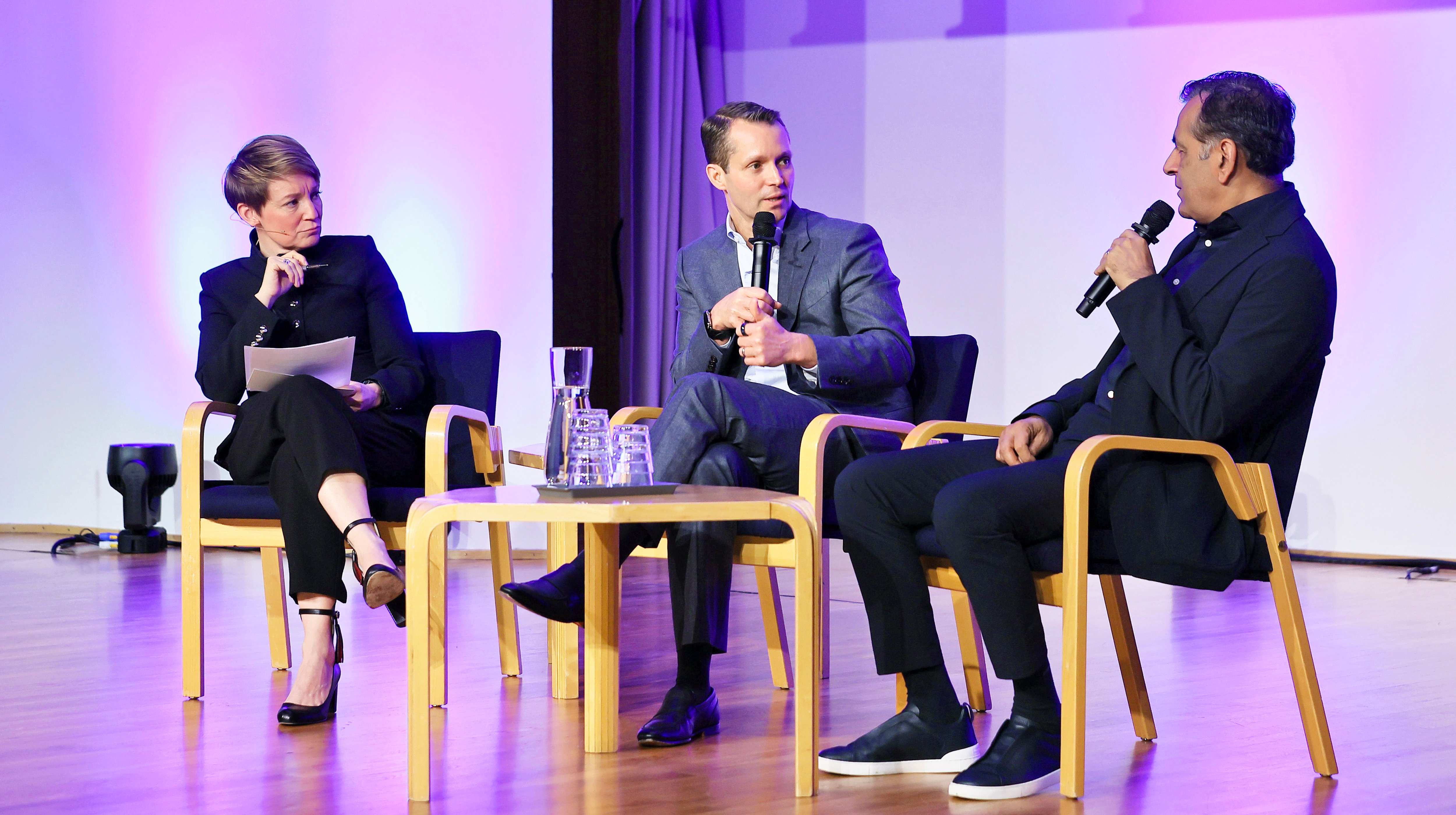
Among the most anticipated moments of the day was when Justin Hotard, President and CEO of Nokia and Ronnie Vasishta, Senior Vice President, Telecoms from NVIDIA discussed the future of networks in an Al era.
Justin Hotard and Ronnie Vasishta discussed how AI is reshaping networks to support intelligent machines and new applications. Hotard emphasised rethinking 6G architecture to bring AI to robots, cars and drones, while Vasishta highlighted rapid progress in the Nokia–NVIDIA partnership and the need for testing before deployment in live networks. Both stressed trust, safety and collaboration, alongside opportunities for new businesses and services.
Finland – a pioneer in 5G Advanced and 6G technologies
The day ended with General co-chair Pekka Rantala from Business Finland sharing a few highlights of the 6G Bridge programme. 6G Bridge programme aimed at building a network of research organisations, companies, and industry-leading stakeholders investing in 5G Advanced and 6G technologies and working together to build new solutions and sustainable business.
"The event underlined Finland’s leading role in global 6G development and importance of international turning research into practical solutions. How ever the hardest 6G questions are business questions. Who pays, who benefits and who captures the value? Edge infrastructure and industry solutions need credible commercial answers, not just compelling demonstrations", he said.
Decisions being made today on technology development, standards, regulation and investment will shape future communication networks, digital competitiveness, industrial innovation and societal resilience for decades to come.